
48 Hours Waste
Hackathon 2026
Using Technology & AI to solve waste management challenges in Cameroon
48 Hours Waste Hackathon 2026
21 – 22 February 2026
WasteHack was an intensive 48-hour hackathon that brought together young innovators, developers, and problem-solvers to develop AI-driven and technology-enabled solutions for effective waste management and the circular economy.
Why WasteHack?
Waste management and recycling are among the key pillars of Durable Impact, Yaounde, Cameroon, and we continue to advance them through our WasteHack event.
Disposing of waste inefficiently not only has health implications but also socio-economic implications. One pressing question on everyone's lips is whether technology and AI can make waste management more efficient, and whether young innovators in Cameroon have the capacity to make it a reality.
Finding long-term solutions to this social problem is very important for us at Durable Impact. Making money or doing business as usual can no longer be the same. Making money sustainably is one thing we discuss and care about a lot — that's where our business model takes its seat: sustainability. It speaks essentially to companies having a positive impact on the community and the environment; it speaks to reducing pollution, addressing climate change, youth unemployment, and gender inequalities.
That is exactly what Durable Impact is all about. In addition to our mission to help Cameroonian startups succeed, we are seeking solutions to poor waste management, reducing pollution, and sustainably solving the unemployment problem.
To make sure we have the best results from WasteHack, we identified three paths to innovation:
Smart waste classification and sorting
Optimising collection and processing
Connecting communities to the circular economy
Participants were encouraged to choose one of the three paths and develop AI-powered solutions that address specific aspects of waste management challenges in Cameroon.
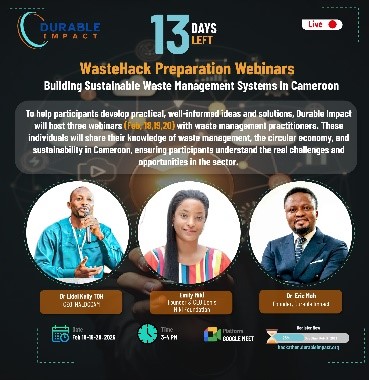
Considering that most of the 99% of the developers who registered had little knowledge about the waste management sector in Cameroon, to help them develop practical, well-informed ideas and solutions, we hosted three webinars (Feb 18, 19, 20) with waste management practitioners. These individuals shared their knowledge of waste management, the circular economy, and sustainability in Cameroon, ensuring participants understood the real challenges and opportunities in the sector.
Pre-Hackathon Preparation
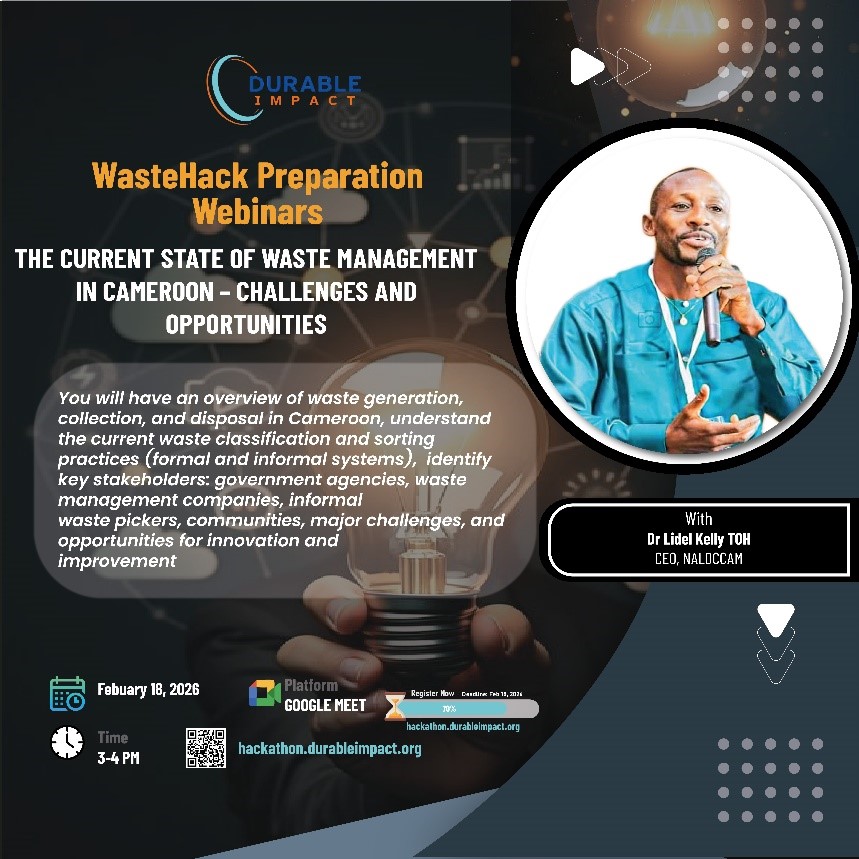
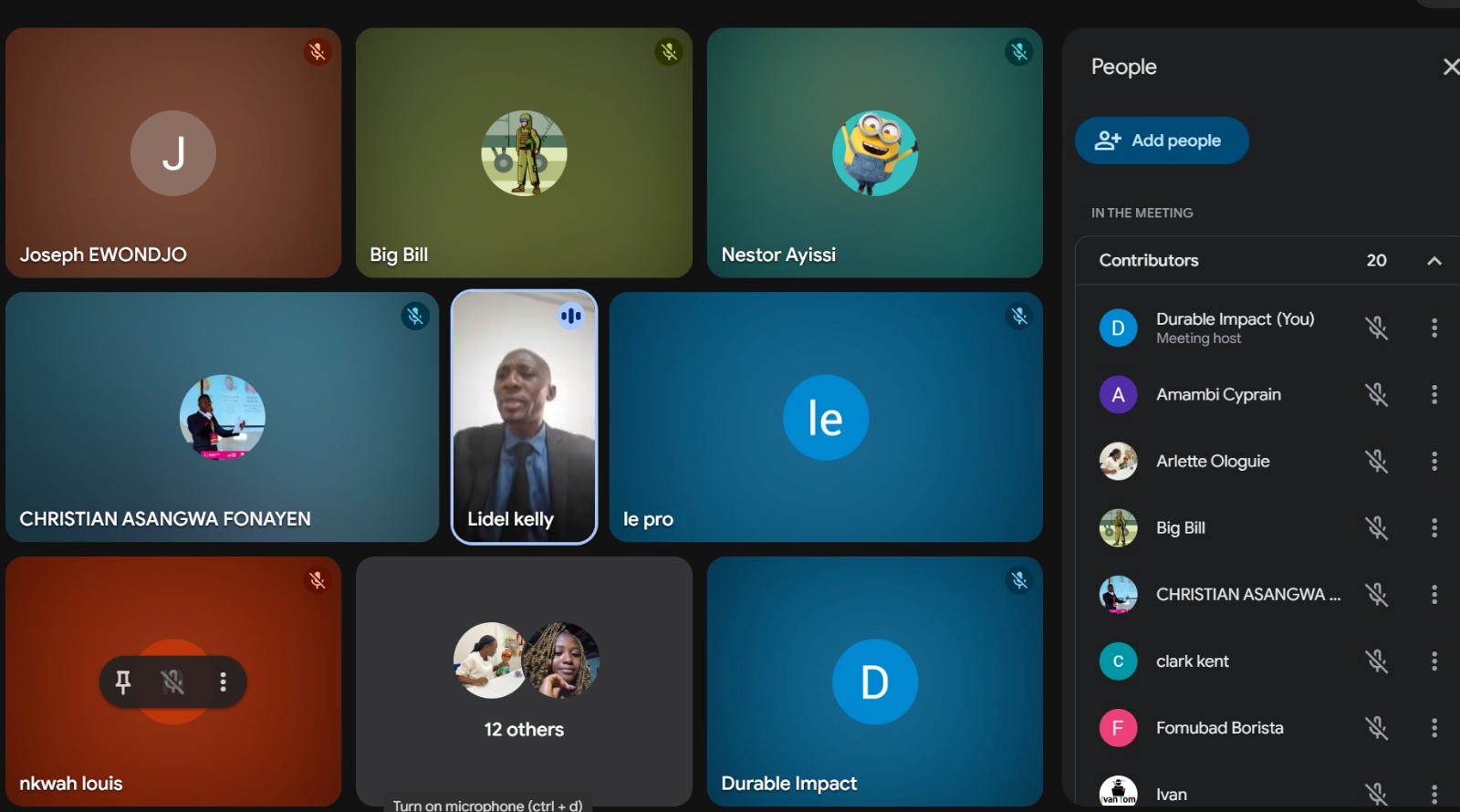
Dr. Lidel Kelly Toh — CEO, NALDCCAM
Dr. Lidel Kelly Toh opened his session with a sobering national portrait. Waste management in Cameroon, he explained, has become a deepening crisis fueled by rapid, chaotic urbanization. Citizens generate 0.8–1.2 kg of waste per person daily (MINEPDED data), adding up to roughly 24 million tonnes nationwide each day. Yet formal collection covers only 30–40% of this volume, mostly in cities, leaving the rest to pile up in uncontrolled wild dumps that dominate the landscape.
He walked the audience through vivid images of overflowing dumpsites and open-air incineration fires, citing studies that link these practices to severe soil and water pollution, public health risks, and greenhouse gas emissions. Sorting remains split between formal private operators such as HYSACAM and THYCHLOF, and a vast informal sector of waste pickers and scrap dealers. Key players include government bodies (MINEPDED, MINDHU), communities, NGOs, and international donors.
After outlining core challenges — insufficient infrastructure, unreliable data, persistent wild dumping, and health impacts — Dr. Toh shifted to hope. He spotlighted composting to slash organic waste and methane, biogas energy recovery (e.g., AGROTECH projects), plastics and metals recycling, community awareness drives, and public-private partnerships for better infrastructure. A concise SWOT analysis reinforced existing collection networks and 73.3% community sorting awareness as strengths, while exposing gaps in recovery capacity and equipment.
Through powerful photographs of both crisis and early recovery efforts, Dr. Toh closed by affirming that targeted innovation and collaboration can turn Cameroon's waste burden into lasting environmental and economic opportunity.
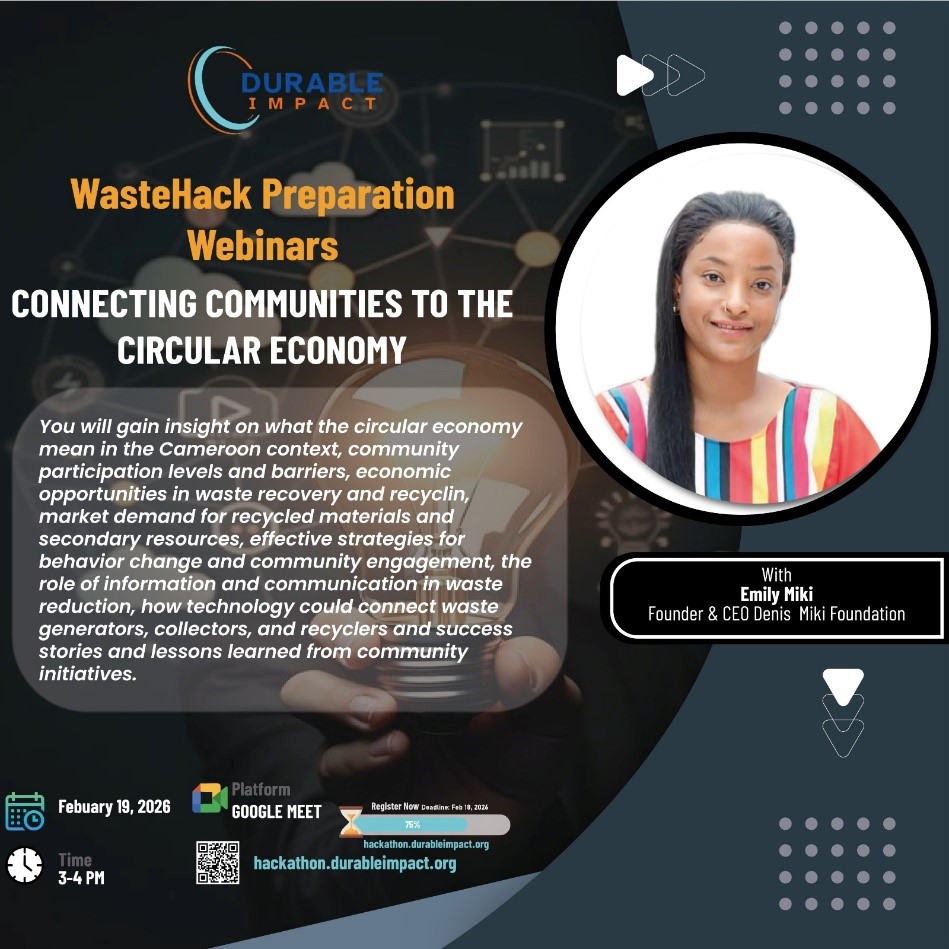
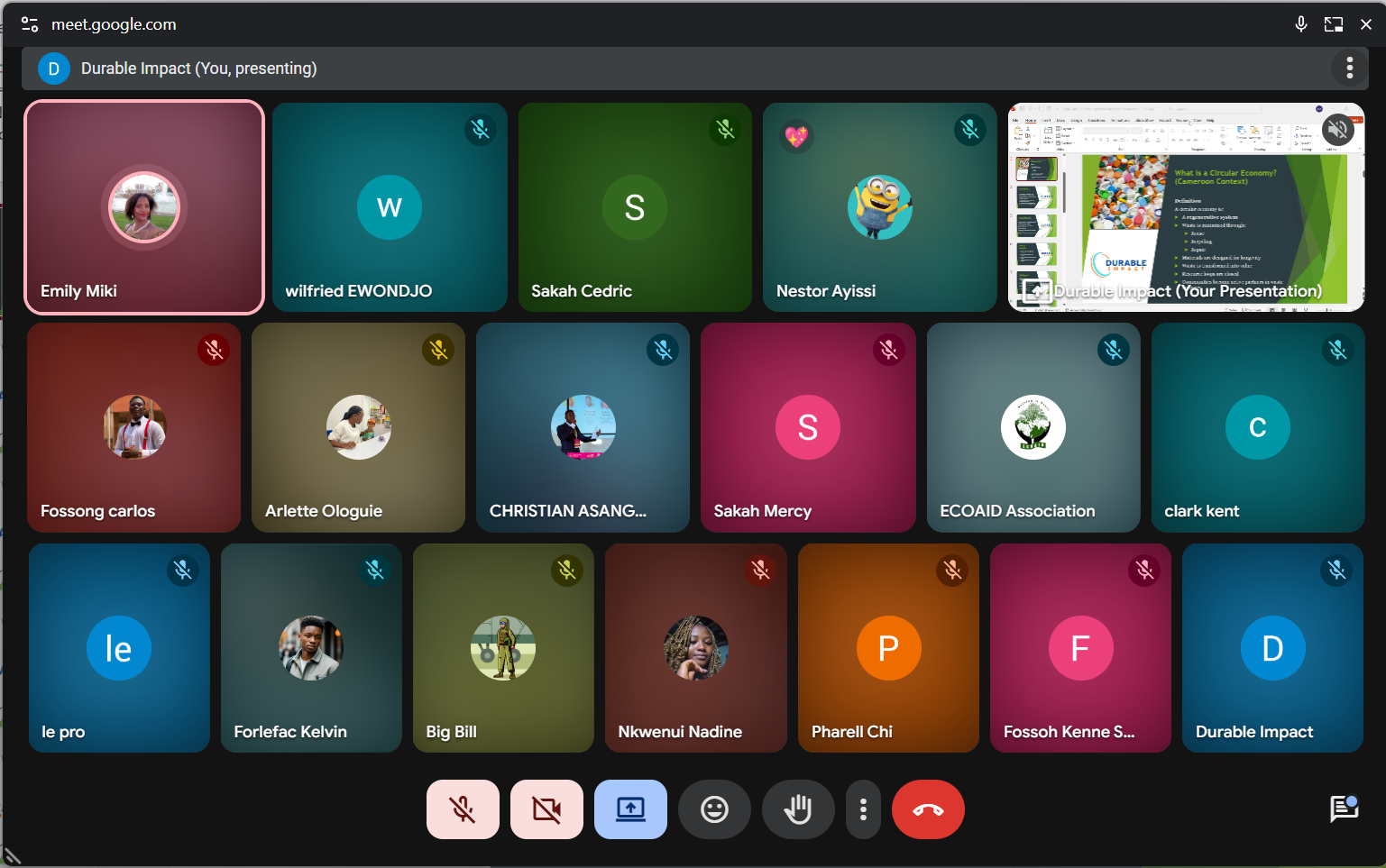
Emily Miki — Founder & CEO, Denis Miki Foundation
In her impactful session, Emily Miki underscored that communities are the heart of Cameroon's circular economy. Over 60% of waste is generated at household and market levels, making community participation essential for any sustainable system.
She defined the circular economy in the Cameroonian context as a regenerative model that minimizes waste through reuse, recycling, repair, and closed resource loops, transforming waste into value while positioning communities as active solution providers rather than mere producers.
Miki examined current participation levels, noting limited household sorting and heavy reliance on the informal sector. She detailed key barriers: poor sorting habits, monopoly control by formal collection companies, weak local authority enforcement, insufficient recycling infrastructure, and negative perceptions of recycled products.
Behavior change emerged as the cornerstone of success. Miki presented practical strategies: community education campaigns, clean-up competitions, reward systems, composting encouragement, and celebration of local champions. She advocated door-to-door awareness, partnerships with community groups, workshops, and involvement of local leaders.
Technology serves as the connector — linking waste generators, collectors, and recyclers through mobile apps, online trading platforms, and GPS tracking. These tools improve collection efficiency, create income opportunities, reduce illegal dumping, and generate data for better planning. A compelling success story from Limbe demonstrated tangible results: cleaner environments, reduced landfill waste, improved food production via compost, and household income from plastic sales.
Miki concluded with clear recommendations: invest in waste collection technologies, develop local recycling policies, support recycling entrepreneurship, and strengthen community awareness programs. The circular economy starts with communities, behavior change is its foundation, and technology plus communication are the enablers.
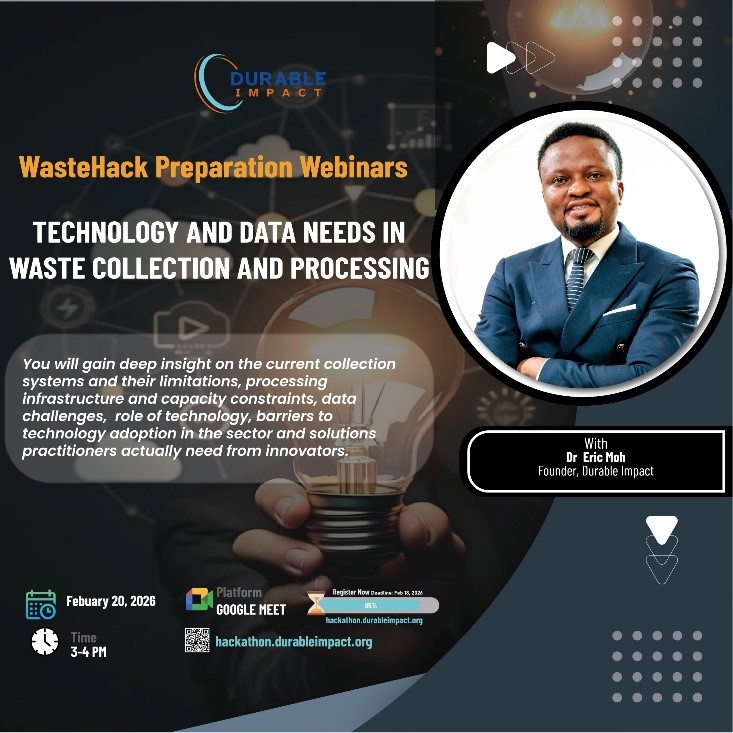
Dr. Eric Moh — Founder, Durable Impact
Dr. Eric Moh delivered a forward-looking session that framed waste management in Cameroon as both a national emergency and a fertile ground for technological innovation. He began by painting the grim realities of developing countries: between one-third and two-thirds of solid waste is dumped indiscriminately, breeding disease vectors and releasing dioxins from open burning. In Cameroon's cities — particularly Yaoundé, Douala, and Limbe — residents endure overflowing roadside piles, weekly or absent collections, and the dangerous habit of street burning.
Dr. Moh dissected the current hybrid collection system, dominated by HYSACAM but supported by roughly 38,000 informal waste pickers who recover 175,000 tonnes of recyclables annually. He noted recent breakthroughs — Genelcam in Douala, Thychlof in Yaoundé, and the new National Waste Exchange digital platform — yet highlighted persistent limitations: 85% reliance on state subsidies causing payment delays and strikes, only 60% collection coverage, no source sorting, and saturated landfills.
Turning to solutions, Dr. Moh explored how artificial intelligence and data systems can transform every stage. Smart IoT dustbins with sensors prevent overflow and enable route optimisation; AI-powered robotic bins and convolutional neural networks (CNNs) achieve up to 90% accurate sorting using TensorFlow and image recognition; machine-learning models separate recyclables at material recovery facilities; and GIS identifies optimal landfill sites.
Finally, he linked AI to the UN Sustainable Development Goals — contributing directly to 10 of the 17 targets — while candidly addressing risks: job displacement for informal workers, rising energy demands, privacy concerns, and the danger of AI serving commercial interests over planetary health. He concluded that Cameroon needs stricter legislation and reversed logistics infrastructure powered by AI to turn waste from a crisis into a circular-economy opportunity.
"Using Technology, AI, and problem-solving skills to address and solve waste management problems in Yaounde, Cameroon"
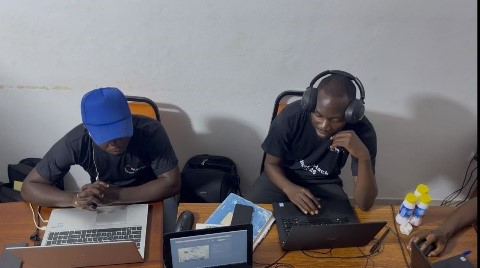
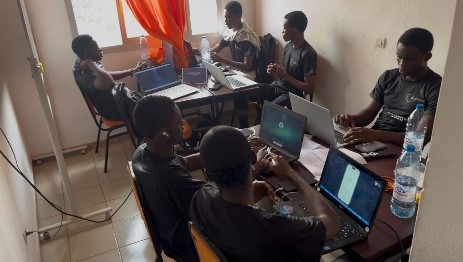
We believe that technology and AI can make waste management more efficient, and that young innovators in Cameroon have the capacity to make it a reality. This conviction was nurtured after spending 48 hours with 9 incredible teams (29 passionate young innovators) of young people who came together for an intense 48-hour hackathon, building AI-powered solutions to tackle waste management and advance the circular economy in Cameroon. From smart collection tools to community recycling platforms, the creativity, collaboration, and real-world impact were inspiring!
Teams
We believe that technology and AI can make waste management more efficient, and that young innovators in Cameroon have the capacity to make it a reality.
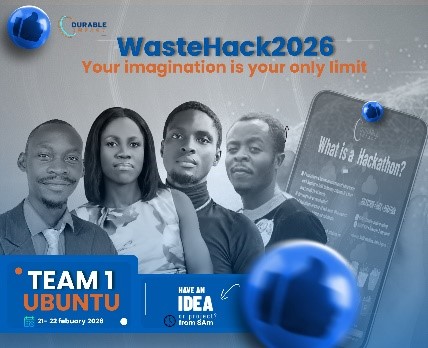
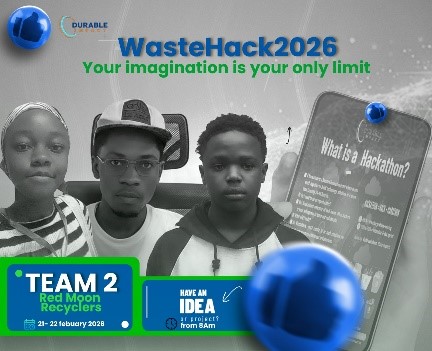
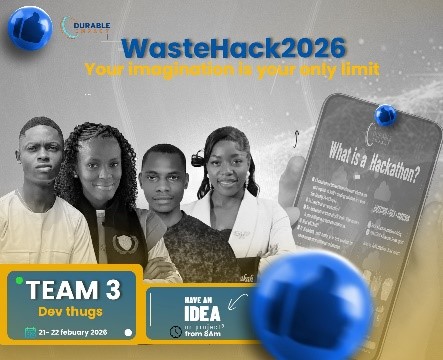
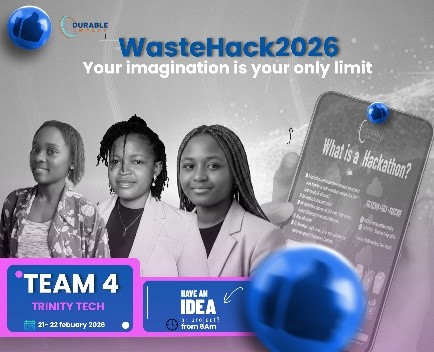
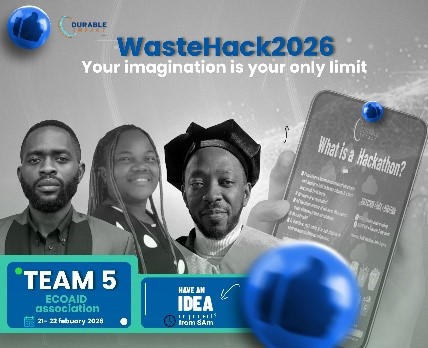
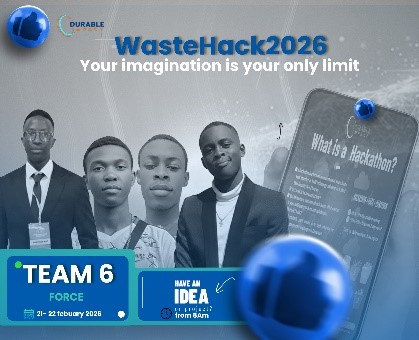
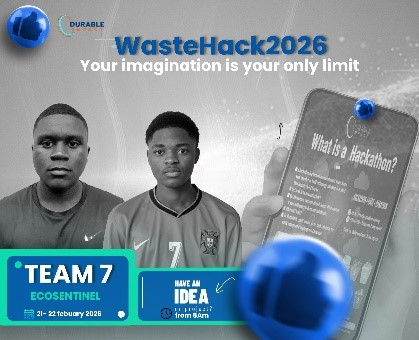
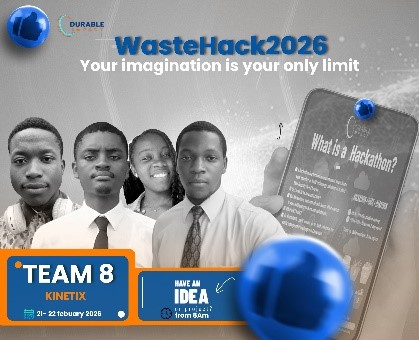
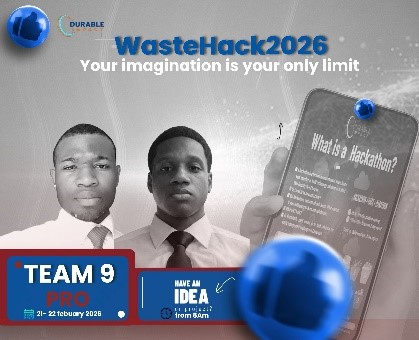
WasteHack Design
Max. 4
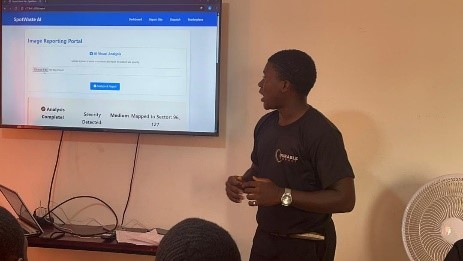
Innovative Solutions Highlights
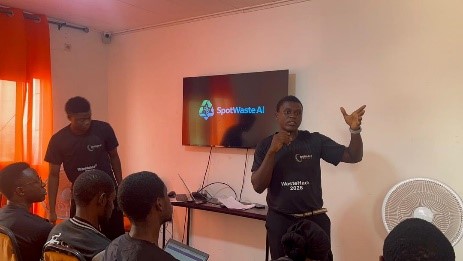
SpotWaste AI
An intelligent, AI-powered waste management platform designed to help cities, councils, and private waste collectors detect, classify, prioritize, and clean waste sites in real time.
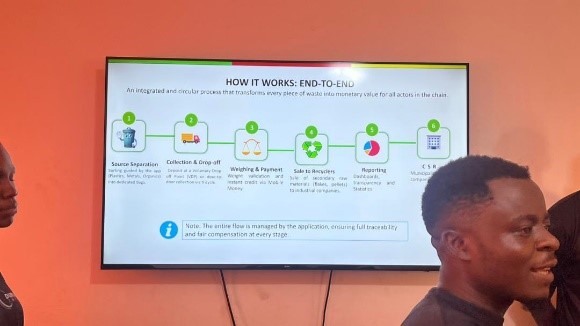
Trash2Value
A circular economy platform connecting waste generators, collectors, recyclers, and transporters in one digital marketplace.
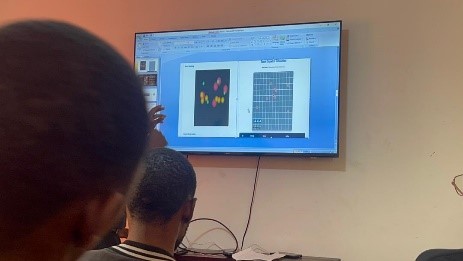
237Circulo AI
A web and mobile platform that connects communities to the circular economy by turning waste into value using AI-powered tools for waste categorization, demand forecasting, and transparent tracking — empowering individuals and businesses to participate in recycling while earning incentives.

CityLink
An AI-powered mobile-first smart waste management system that helps households and waste collectors manage waste more efficiently. It uses AI to classify waste through images, guides users on proper disposal, and optimizes collection routes for waste collectors.
Garbify
A smart waste management system that helps households and waste collectors manage waste more efficiently. It uses AI to classify waste through images, scanning, guides users on proper disposal, and optimizes collection routes for waste collectors.
Ready to join the next WasteHack?
Whether you are a developer, designer, researcher, or changemaker — we want you at the next edition. Join us in building AI-powered solutions for a cleaner, more sustainable Cameroon.