

ENGEN
Empowering the Next Generation of (Young) Entrepreneurs
Cameroon, with an estimated population of nearly 30 million (Cameroon's National Institute of Statistics, 2024; Worldometer, 2025), is situated between Central and West Africa, serving as both a demographic and economic connector. Over 65% of its population is under 35, and the youth make up a substantial part of the labor force, many of whom struggle to secure formal employment. The youth unemployment rate is approximately 6.44%. However, unemployment among educated young people aged 25 to 35 is considerably higher, with a rate of 14.8 percent (National Institute of Statistics). Despite the persistent growth and contribution of Small and medium-sized enterprises to the country's GDP, the unemployment rate remains high and worrisome. With 70% of SMEs located in Yaoundé and Douala, many small businesses, especially informal ones, struggle to survive beyond the incubation phase. A 2016 study cited by the Ministry of Small and Medium-Sized Enterprises indicates that three out of five businesses in Cameroon fail within the first few months of starting.
Cameroon's entrepreneurial landscape is alive and has a lot of potential, yet is riddled with familiar frustrations. Young startups battle insufficient access to finance, fragmented markets, inadequate business planning, and an ecosystem that does not always reward innovation. Too many brilliant ideas die quietly before they ever reach the market. Too many aspiring founders walk away because they lack not ambition, but the frameworks and mentorship to channel it.
Durable Impact saw this gap and refused to accept it. We designed ENGEN as a precision-targeted intervention: bring together exceptional minds, deliver cutting-edge entrepreneurial frameworks, and release a generation of more capable, more confident, and more investor-ready founders into the Cameroonian ecosystem.
The Target and Goal
The ENGEN program supports startups, small business owners, and managers by strengthening their entrepreneurial capacity, helping them identify viable market opportunities, write business plans, develop clear value propositions, leverage digital tools to improve performance, and design strong bankable business models that attract finance. The event brought together four sessions, four exceptional speakers, and one unifying conviction — that entrepreneurship, done right, is not just a livelihood. It is a force for national transformation.
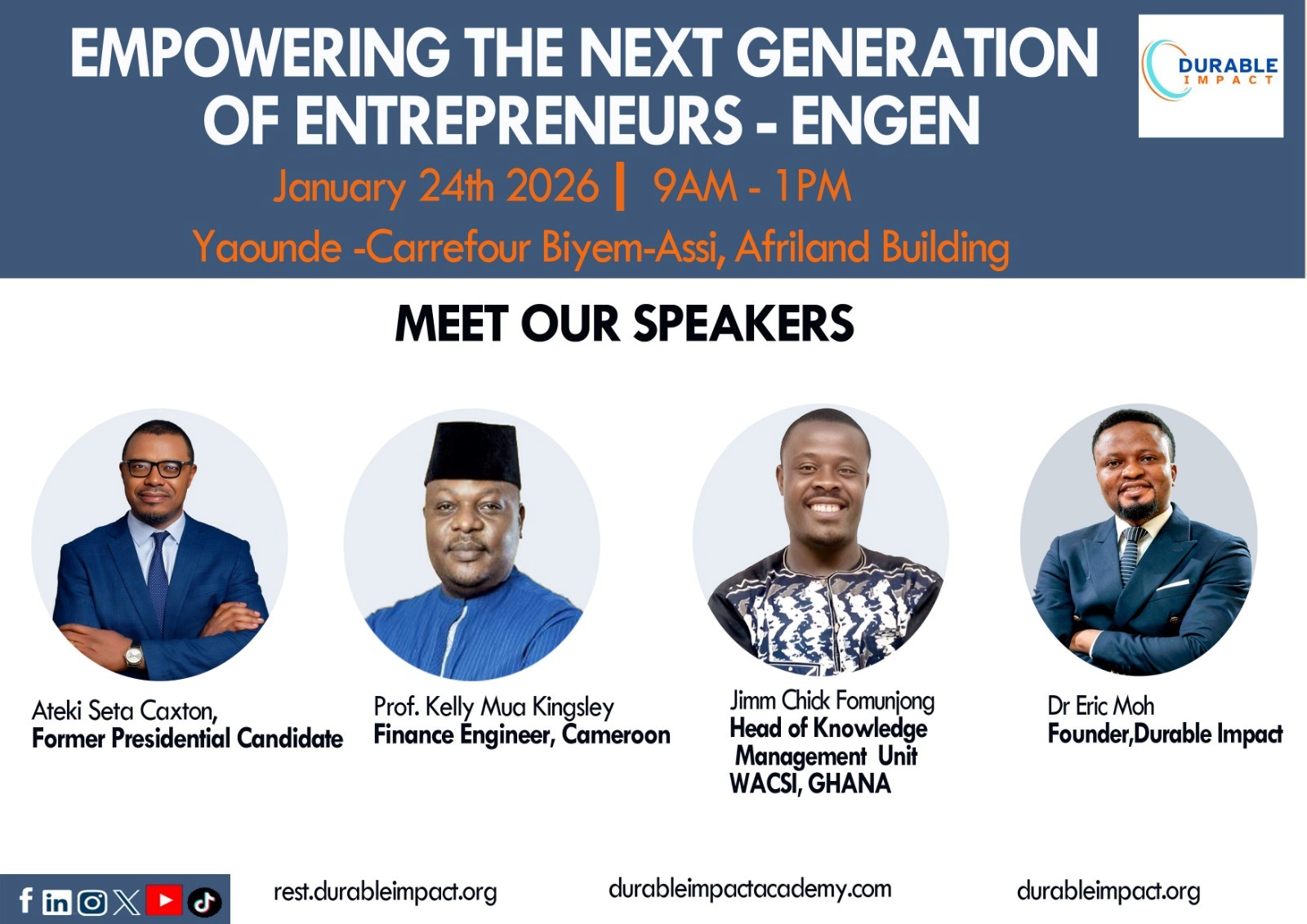
Speakers — First Edition
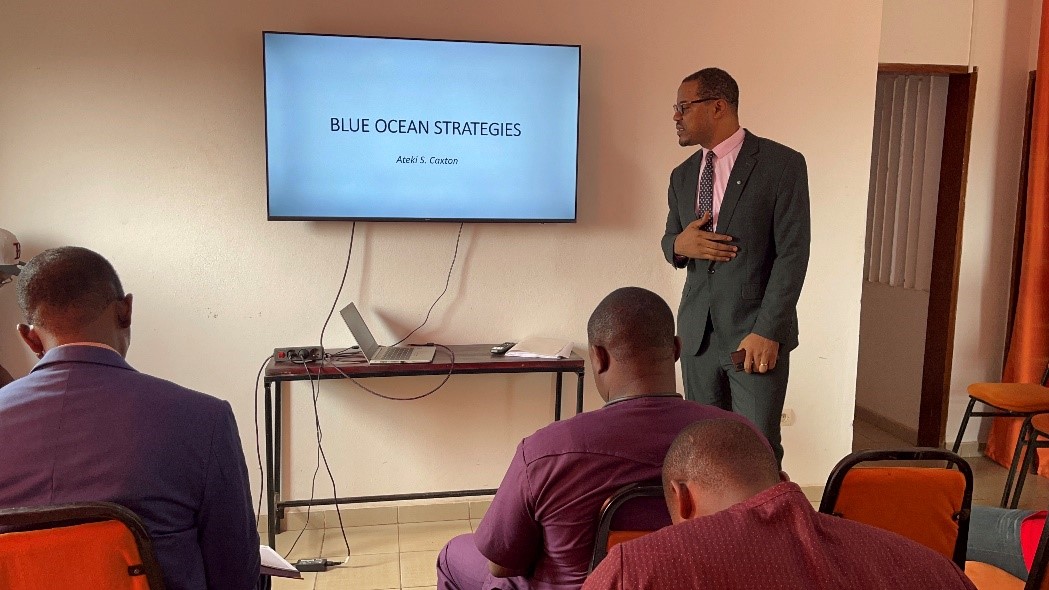
Blue Ocean Strategy
Ateki Seta Caxton — 2025 Presidential Candidate
The morning opened with one of the most distinguished voices in the room — Ateki Seta Caxton, 2025 Presidential Candidate, a man who has spent decades navigating the intersection of leadership, politics, and entrepreneurship. His session did not begin with slides or statistics. It began with a provocation: entrepreneurship is daring. It demands that you lean into uncertainty rather than retreat from it.
Before unpacking solutions, Ateki invited participants to name their reality. The challenges that emerged from the room were painfully familiar — the absence of finance, difficulties in marketing, poor conservation strategies, business liquidation, an unstable ideation process, an unenabling business environment, crushing taxes, and brutal market competition. These were not abstract problems. They were the lived experience of every person seated in that room.
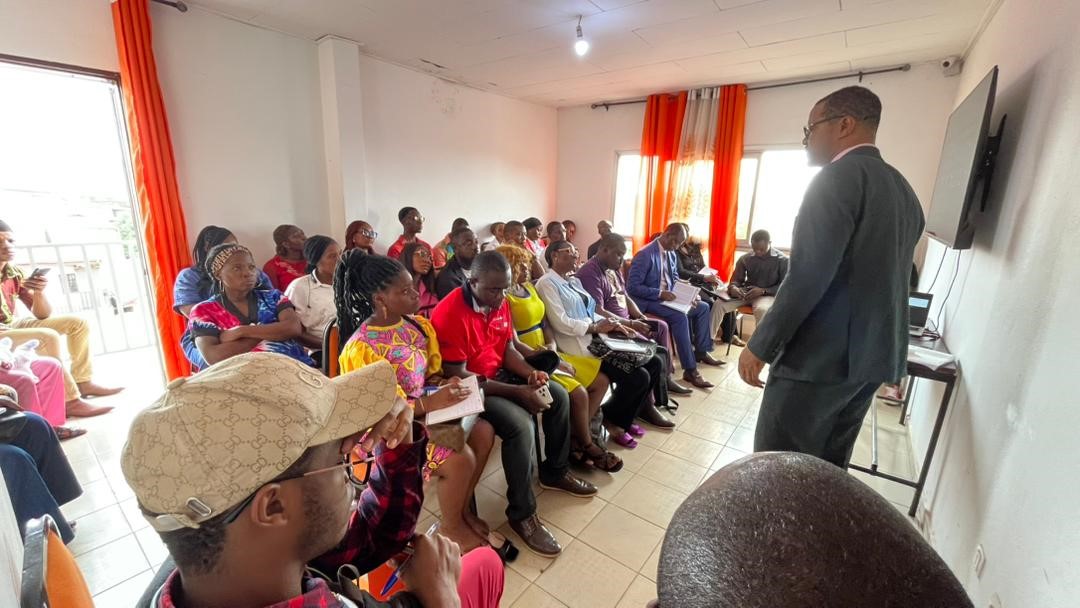
The Red Ocean Trap
Ateki framed the problem precisely. Most Cameroonian businesses, he argued, are locked in what strategists call a Red Ocean — a marketplace where many suppliers fight over the same customers with virtually identical products or services. The result is a race to the bottom: aggressive price-cutting, wafer-thin margins, and a culture of survival rather than innovation. In red oceans, competition consumes energy that should fuel growth.
Setting Sail for Blue Waters
The antidote, he revealed, is the Blue Ocean Strategy — a globally acclaimed framework developed by W. Chan Kim and Renee Mauborgne at INSEAD. The premise is elegantly simple but profoundly disruptive: rather than fight for existing demand, create new demand. Rather than compete, make competition irrelevant.
The Four Actions Framework: ERRC
To translate the concept into action, Ateki walked participants through the Four Principles of Blue Ocean Creation — a practical toolkit every entrepreneur can begin applying immediately:
Identify factors your industry takes for granted and remove them. They add cost, not value.
Elevate elements far above the industry standard. Compete on quality where it truly matters to your customer.
Cut down on over-engineered elements that inflate costs without enhancing the customer's experience.
Introduce entirely new features, services, or experiences that the industry has never offered.
His closing message resonated through the room long after the hour ended: every hurdle a Cameroonian entrepreneur faces is, at its core, an invitation to innovate. The entrepreneurs who will build tomorrow's great companies are not those who compete harder — they are those who think differently.
How Startups Can Build Bankable Business and Attract Finance
Prof. Kelly Kingsley Mua — Founder, Prima Finance
One of the most common frustrations shared by African startups is this: they have vision, they have passion — but they cannot access capital. Prof. Kelly Kingsley Mua, Founder of Prima Finance, is a man who has built his career at the intersection of entrepreneurship and financial systems. Though he was unable to attend in person, his presence was felt powerfully through two carefully chosen representatives — a gentleman and a lady who delivered his session with clarity and conviction.
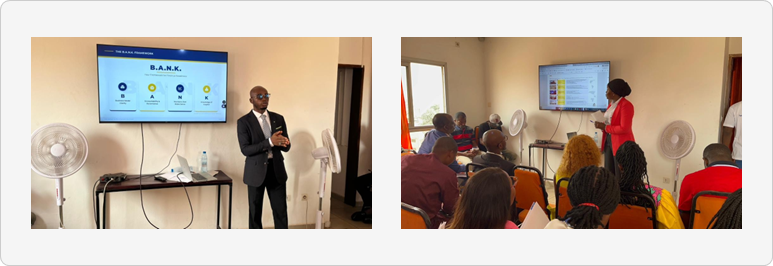
Representatives of Prima Finance delivering Session Two on behalf of Prof. Kelly Kingsley Mua
The first representative took participants through Prof. Kelly's framework on how to build a bankable business — one that financiers, investors, and development institutions can confidently fund. He dismantled the myth that obtaining finance is primarily about connections or luck. At its core, he argued, it is about credibility — and credibility is built through systems, documentation, and strategic thinking.
The second representative, speaking on behalf of Prima Finance directly, introduced participants to the specific services, instruments, and pathways that Prima Finance offers to help entrepreneurs structure their businesses in ways that meet the expectations of funders. Her session was practical and deeply relevant — a bridge between aspiration and access.
Together, their session reframed the relationship between entrepreneur and financier. Rather than approaching funding as a gamble, participants left understanding it as a process — one that could be engineered through deliberate preparation.
Building a Solid Business Plan that Attracts Investors
Dr. Eric Moh
Among the standout presentations was Dr. Eric Moh's session on crafting investor-ready business plans using the Business Model Canvas (BMC). Delivered with clarity, structure, and practical relevance, the session equipped aspiring entrepreneurs, startup founders, and small-business owners with a proven framework to turn ideas into bankable realities — perfectly aligning with ENGEN's core mission.
Dr. Moh opened by emphasising self-examination and risk awareness. He reminded participants that knowledge is power and that launching without preparation is one of the biggest pitfalls. Using compelling statistics from small-business trends, he highlighted that 46% of failures stem from incompetence, 30% from lack of managerial experience, and 11% from insufficient industry expertise. Yet he also offered hope: 50% of new businesses survive the first year, with 40% turning a profit. This honest framing set the tone — preparation, not passion alone, is the true priority.
The Business Model Canvas
He then defined a business plan as "a well-written document that outlines goals, strategies, target market, and financial projections." Rather than a lengthy document, he introduced the Business Model Canvas as the ideal foundation: a one-page, visual strategic tool with nine building blocks that lets investors grasp the entire value-creation story in under 60 seconds. Dr. Moh displayed the full graphical canvas and explained why investors love it — it is clear, customer-focused, and fluff-free.
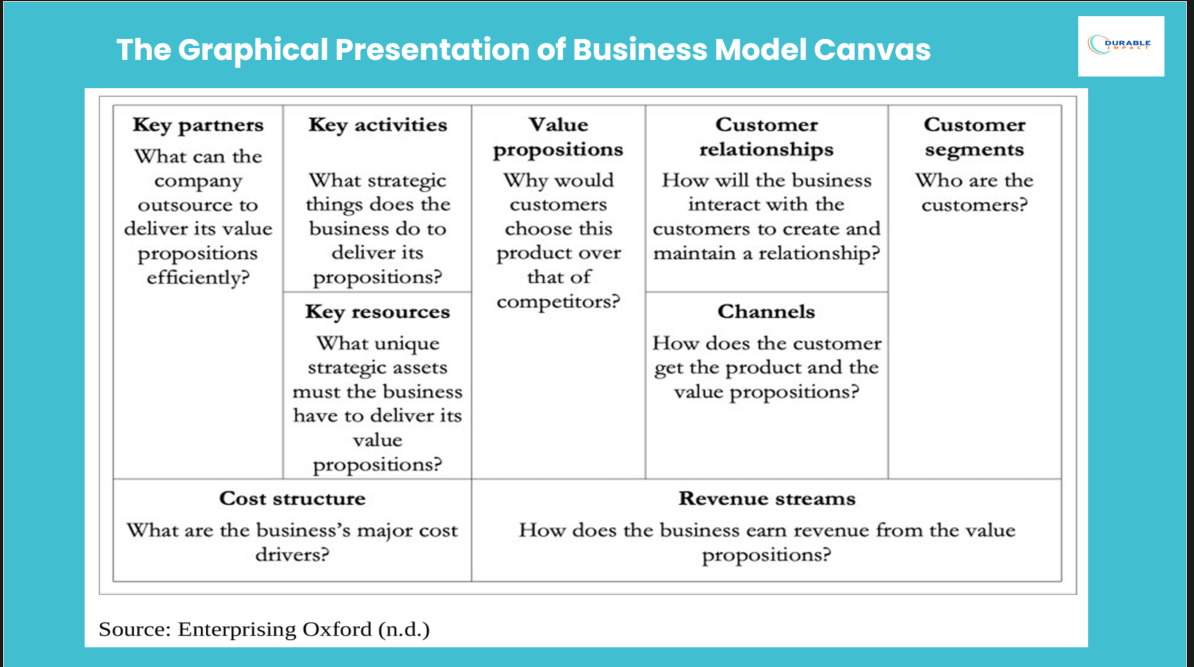
A practical highlight followed: guided by nine targeted daily questions covering key partners, activities, resources, value proposition, customer segments, channels, customer relationships, cost structure, and revenue streams, Dr. Moh stressed that consistent use of the BMC helps entrepreneurs track environmental scans, ensure survival by covering costs, differentiate from competitors, and adapt to change — turning the canvas into a living management tool.
Understanding Local Context
The session then zoomed in on the local context, which required understanding your local context before defining a specific social or environmental issue your business aims to solve. He urged the audience to identify Cameroon-specific challenges — unemployment, limited access to finance, skills gaps, infrastructure constraints — and to illustrate them visually using a problem-tree analysis. He encouraged the use of updated data and real-world examples to show why new businesses are urgently needed in communities and cities across the country.
Theory of Change
Building directly on those challenges, he introduced the Theory of Change: mapping desired impacts, the results to be achieved, and the specific actions and resources required. This logical framework helped participants connect local problems to measurable solutions.
Market Opportunity and Analysis came next. Dr. Moh walked attendees through defining target beneficiaries, assessing community needs, estimating market potential with data and graphs, and conducting competitor analysis via SWOT.
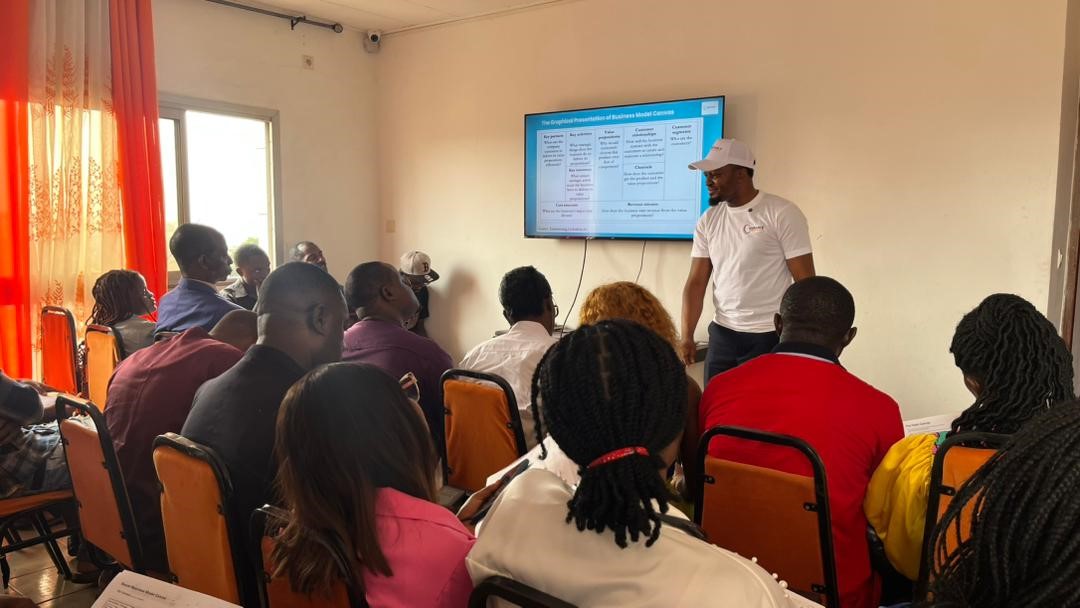
Market Opportunities and Analysis
He posed critical questions: How many similar providers exist? Where are their weaknesses? What pricing and marketing tools — social media, SEO, content, influencer campaigns — do they use? An in-depth market analysis, he explained, turns assumptions into an evidence-based strategy. He shared practical tactics participants can use to get to the market: networking, local partnerships, social-media marketing, referral programmes, localised content, and thought leadership.
Dr. Moh used the case of Durable Impact to further elaborate on product and service diversity, highlighting examples such as events, tailored programmes, an empowering co-working space, impact marketing, content creation, and environmental commitments.
Business Model, Team & Governance

On crafting business model & market strategy, Dr. Moh guided the room on building a financially sustainable model: pricing logic, unique value proposition, differentiation in the local context, and channels to attract members and fundraise.
Team composition was presented as the human engine of success. Each member's role, time commitment (FTE), skills, experience, and LinkedIn/CV links were to be clearly shown. Dr. Moh also addressed governance — legal structure and relationships (shareholders, investors, employees) — and asked what gaps remain and how they will be filled.
Financial Projections
Financial Projections provided the numbers investors crave. Participants were instructed to share cash-flow summaries, profit margins (operational, EBITDA, net), break-even point (in months and sales volume), payback period, and 3-year P&L and cash-flow charts — all designed to demonstrate financial health and viability. He emphasized the importance of stating the total investment required, the exact use of funds, amounts already secured and their sources, plus credible plans to close the remaining gap.
Risk Assessment
Finally, Risk Assessment encouraged honest reflection: "What can go wrong?" Dr. Moh prompted teams to list foreseeable risks, mitigation strategies, and any critical conversations still needed — ensuring plans are resilient rather than optimistic fantasies.
Dr. Eric Moh's masterclass perfectly embodied ENGEN's promise: it transformed abstract theory into a concrete, step-by-step roadmap that participants could immediately apply. By combining the simplicity of the Business Model Canvas with rigorous local analysis, financial discipline, and risk awareness, the presentation showed that a well-crafted plan is not paperwork — it is the foundation for sustainable growth and national impact.
Designing a Winning Value Proposition: How Startups Build Competitive Advantage
Jimm Chick Fomunjong — Head of Knowledge Management, WACSI, Accra
Following Dr. Eric Moh's deep dive into investor-ready business plans, Jimm Chick Fomunjong delivered a compelling follow-up masterclass on crafting a winning Unique Value Proposition (UVP). As Head of the Knowledge Management Unit at the West Africa Civil Society Institute (WACSI) in Accra, Ghana, and an experienced Organisation Development Practitioner and Communications Strategist, Jimm brought regional expertise and practical insight that directly supports ENGEN's mission.
He opened by immediately engaging the audience with interactive reflection questions — so targeted that they cut through the fog that often surrounds startup thinking:
What are the key challenges that Cameroon startups can contribute to resolving?
What challenges do startups face in Cameroon?
What can enable a startup to be preferred by its target audience?
What Is a Value Proposition — Really?
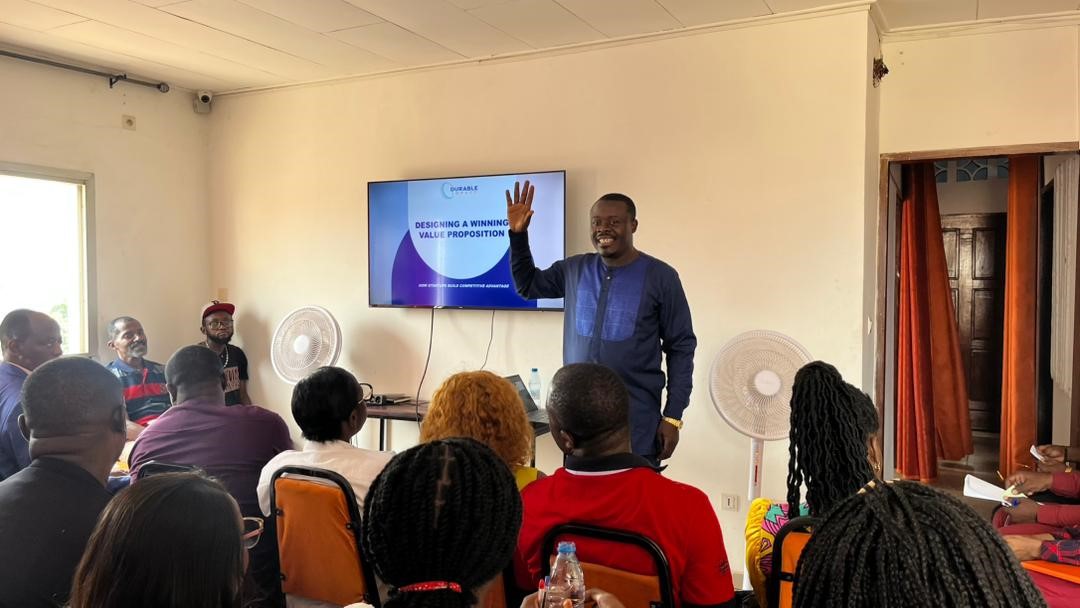
He framed these as essential starting points — linking societal problems, startup realities (especially awareness), and competitive differentiation.
He then explained why a Unique Value Proposition matters — a clear statement that answers why customers should choose your business over competitors. From there, Jimm presented a six-step roadmap, illustrated with a powerful staircase image to emphasise "Take one step at a time."
The Six-Step Roadmap
He walked participants through a disciplined, six-step process for building a UVP that stands up in the real world:
Understand the concept of a Value Proposition
A clear explanation of the unique benefits your product or service delivers and why it better meets customer needs than alternatives.
Conduct deep market research focused on Cameroonian realities
He highlighted demographics (urban vs. rural, income levels), cultural influences (language preferences, traditions), purchasing behaviour, motivations, and critical regional differences (Douala, West Region, Far North, Center, North West, South West).
Understand the constraints and realities facing startups
Jimm listed distinctive obstacles: strategy and management challenges, financial limitations, credit access constraints, regulatory compliance burdens, and market unpredictability. Recognising these realities helps entrepreneurs design realistic, achievable value propositions.
Identify your competitive advantage
Participants learned to analyse competing offers, spot gaps, and leverage local strengths — better product quality, faster or localised delivery, superior customer service, innovation (e.g., digital payments integration), "Made in Cameroon" positioning, and pricing adapted to local purchasing power.
Craft a clear, simple, and compelling UVP statement
Keep it short and understandable, highlight specific benefits, explicitly state what makes you different, and use relatable language. He provided a ready-to-use template:
"For [target market] who want [problem solved], our product/service provides [benefit] unlike [competitor], because we offer [unique advantage]."
Concrete example: "We help rural women farmers in Cameroon increase their yields sustainably through agroecological training, nature-based solutions, and access to eco-friendly inputs — improving incomes while protecting biodiversity."
Test the value proposition with real clients
Through social media engagement analysis, pilot launches in selected regions, and direct feedback from loyal customers. Real-world refinement keeps the UVP relevant and competitive.
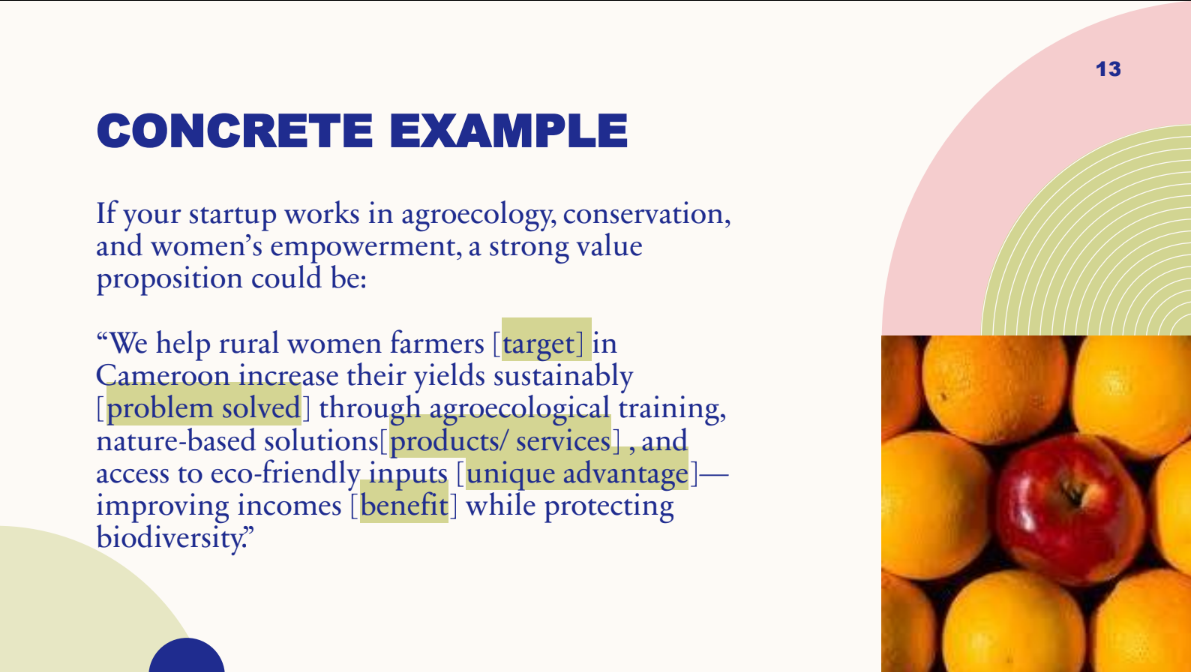
Key Example slide from Jimm Chick's session on designing a Winning Value Proposition.
Qualities of an Excellent Unique Value Proposition
What makes it excellent
- Clear
- Specific
- Customer-focused
- Impact-driven
What weakens it
- Too vague or generic
- Focuses on features instead of benefits
- Tries to serve "everyone"
- Ignores real pain points
- Fails to show differentiation
- Uses buzzwords
- Too long
Jimm Chick Fomunjong's masterclass perfectly bridged Dr. Moh's business-plan foundation with the next critical layer — a sharp, customer-centric value proposition tailored to Cameroon's unique ecosystem. By combining interactive reflection, Cameroon-specific research, practical tools (SWOT and PESTEL), real examples, and testing strategies, the session equipped participants to move from ideas to differentiated, finance-ready offerings — exactly what ENGEN exists to deliver.
Ready to join the next edition of ENGEN?
Whether you are an aspiring founder, a small business owner, or an organisation looking to support the next generation of Cameroonian entrepreneurs — we'd love to hear from you.